
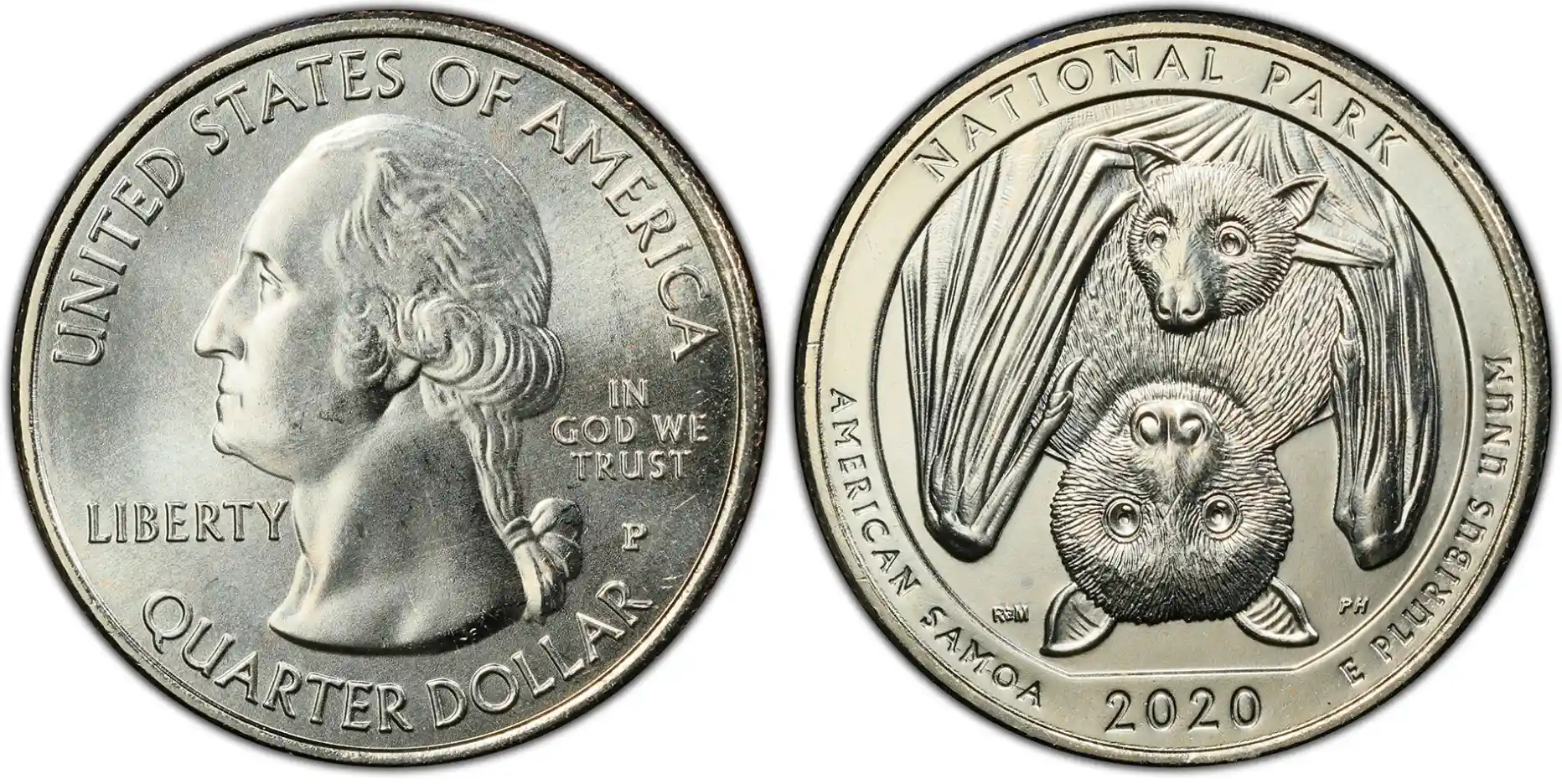
Better quality coins showing no wear can reach a price from $2 to $5 on the coin market. Rare specimens can sell for a record 2020 Bat Quarter Value of $4500 at major public auctions.
| Parameter | Value |
| Nominal value | $0.25 |
| Metal composition | Copper and nickel metal |
| Coin weight | 5.67 grams |
| Coin thickness | 1.75 millimeters |
| Coin diameter | 24.26 millimeters |
| Edge type | Reeded |
Mint Mark Influence on Market Price
Mint marks tell collectors where the coin was made. This small letter on the front side dictates the market price.
Philadelphia Mint
Philadelphia coins have a P mint mark. This mint produced millions of these coins for normal circulation. The average circulated P quarter has a value of exactly $0.25. Uncirculated coins in MS65 quality sell for about $2. Superb quality pieces in MS67 can reach a worth of $15.
Higher grades like MS68 are rare, commanding a price around $45. People cannot sell normal P quarters for a high price without a professional grading certificate. Buying uncertified P quarters rarely brings any investment return.
Denver Mint
Denver quarters carry a D mint mark on the front side. Denver made these coins for daily business transactions. The current value of a circulated D quarter is only $0.25. A collector can buy an MS65 graded D quarter for about $2. Coins reaching MS66 quality sell for approximately $4.
An exceptional MS67 graded specimen can cost around $12. The market has too many of these coins, keeping the average price low. Investors usually avoid standard Denver quarters, choosing rarer mint errors or special editions.
San Francisco Mint
San Francisco coins show an S mint mark. These coins were not made for general circulation. The mint produced them for collector sets. The base metal copper nickel version has an uncirculated value between $3 and $5. The silver metal version in standard proof condition has a worth of $10 to $15.
A perfect silver proof coin graded PR70 Deep Cameo can reach a price of $35. Silver quarters contain real silver metal, protecting their base value from market drops. Collectors pay a premium for the silver content and the mirror finish.
West Point Mint
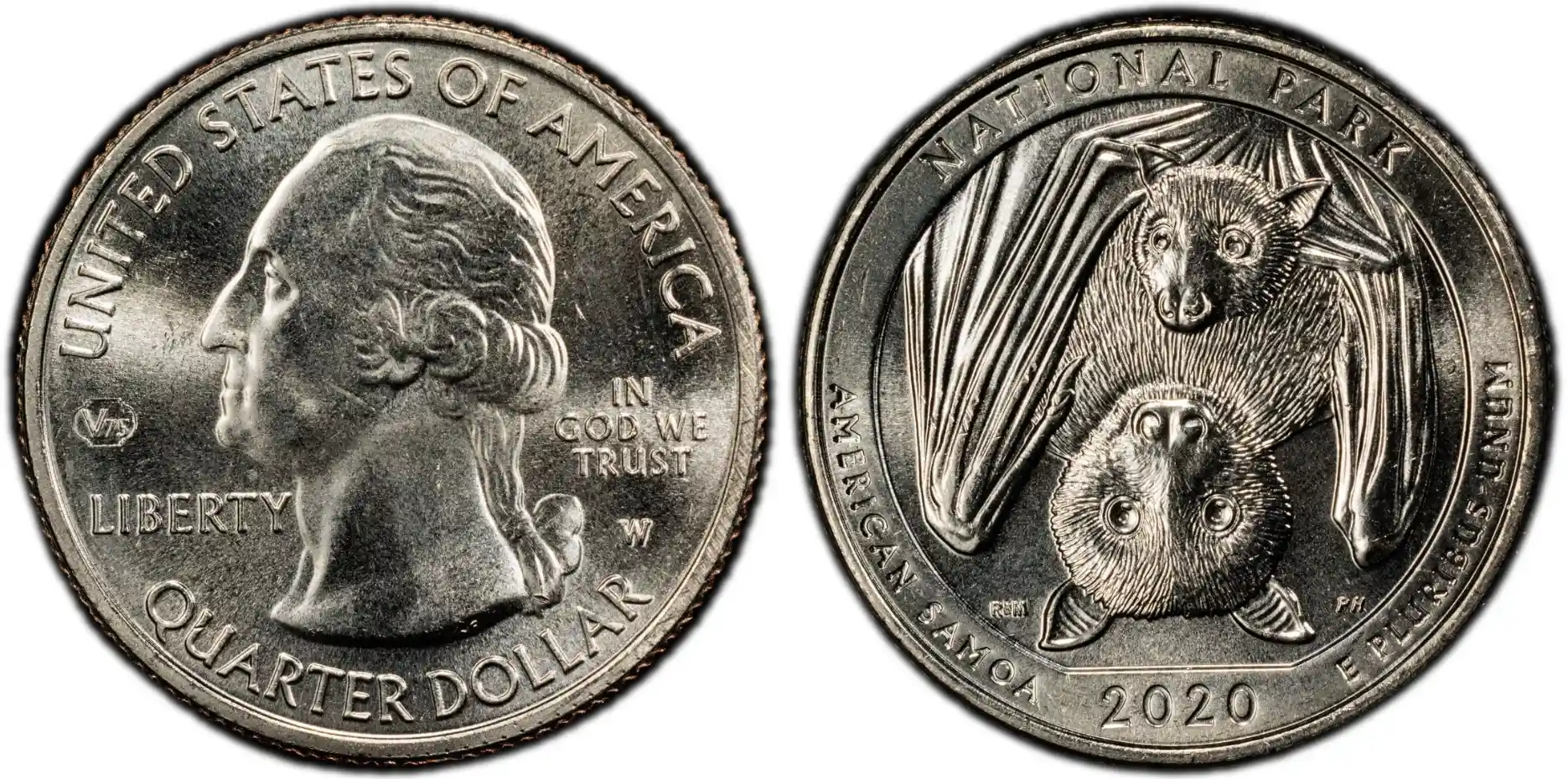
West Point quarters display a W mint mark. The United States Mint also added a V75 privy mark to these coins. This special mark celebrates World War II. The mint made only 2 000 000 of these quarters, mixing them into standard coin bags. This surprise release created a huge treasure hunt among collectors.
Even a heavily worn W quarter found in change has a minimum value of $10 to $15. Uncirculated examples in MS65 condition sell for $45. High quality coins in MS67 quality sell for $220. A rare MS69 certified West Point quarter holds an auction record of $2100. This version remains the most profitable standard bat quarter to find.
| Grade level | Mint P value | Mint D value | Mint S nickel value | Mint S silver value | Mint W value |
| MS63 | $0.50 | $0.50 | $3 | $12 | $20 |
| MS64 | $1 | $1 | $4 | $15 | $30 |
| MS65 | $2 | $2 | $5 | $18 | $45 |
| MS66 | $5 | $4 | $7 | $22 | $90 |
| MS67 | $15 | $12 | $15 | $30 | $220 |
| MS68 | $45 | $35 | $40 | $65 | $650 |
| MS69 | $180 | $150 | $95 | $140 | $2100 |
Mint Error Types Raising Coin Value
Production mistakes at the mint create unique coins. Collectors pay massive premiums for these errors.
Die Chip Error
This mistake is called the Blind Bat error. Sometimes metal chips break off the coin die during production. This leaves extra metal on the bat face or wings.
- Blind Bat
- Bat Hat
- Extra metal
A raw coin with this chip error has a value of $5 to $20. A professional grading service increases the price of these error coins to $50.
Struck Through Error
This error happens when foreign material gets between the coin die and the metal planchet. Grease or debris fills the design details, leaving a smooth surface. The most famous version is the Faceless Bat error.
- No face
- Grease fill
- Smooth metal
The average market worth of this error ranges from $50 to $150. An exceptional MS66 graded example holds a record price of $295.
Off Center Strike
Misalignment of the coin blank causes off-center designs. The design is shifted, leaving a blank area on the coin.
- Misaligned blank
- Missing details
- Blank edge
Coins showing a small 5% to 10% shift sell for $20 to $50. A major 50% off-center strike keeping the full 2020 date can reach a price of $200. Coins missing the date have a lower value of $75.
Missing Clad Layer
The outer nickel metal layer fails to bond to the copper metal core. One side shows a red copper metal surface.
- Red copper
- Missing nickel
- Dual color
The raw value of a coin with a missing layer is between $100 and $300. A rare specimen missing 98% of the reverse clad layer sold for a record price of $2499.
Guide for Home Coin Grading
Professional grading costs money. Grading at home helps collectors decide if a coin is worth sending to grading companies.
Circulated Grade
Circulated coins show clear signs of use in daily trade. The fine details on the bat wings are worn down. The hair on the Washington portrait looks flat and dull. These coins have a value of exactly $0.25.
About Uncirculated Grade
This grade applies to coins with very minor wear on high points. The original mint luster remains on parts of the metal surface. Some light scratches are visible from contact inside bank bags. The market value of these coins is between $0.50 and $1.
Mint State Grade
Mint State coins have zero wear, keeping 100% of their original mint shine. The bat fur and wings look extremely sharp and detailed. No heavy scratches appear on the coin surface.
An MS65 grade requires clean fields around the portrait. An MS67 grade requires a nearly perfect surface with no visible marks under magnifying lenses. These high-grade coins command premium prices.
Coin Storage Errors Lowering Market Value
Poor storage ruins a high value coin instantly. Many collectors lose money making simple mistakes.
Coin Cleaning
Cleaning coins with chemicals destroys the original mint luster. Rubbing the metal surface with a cloth creates micro-scratches. This damage reduces the market value by 80%. Grading services return cleaned coins with a details label, destroying their investment potential.
PVC Plastic Album Storage
Cheap plastic holders contain PVC chemicals. Over time, these chemicals release gas reacting with the copper metal core. A green residue forms on the surface, eating into the metal.
This chemical damage reduces the coin value to zero. Collectors must use cardboard holders containing no acid.
Bare Hand Contact
Human skin contains acids and oils. Touching the coin face leaves invisible fingerprints. These spots turn into dark stains over time, ruining the coin surface.
Always wear cotton gloves when handling valuable coins. Hold the coin only by the edge.
Coin Buying and Selling Recommendations
Making money requires careful trading habits. Knowing where to trade prevents losses.
- Verified holders
- Online auctions
- Cotton gloves
- Edge holding